Were Viking Ships Mainly for Raiding, or Was Trade the Bigger Deal?
Ask someone to picture a Viking and the answer is likely to arrive with a longship: a low, elegant hull, shields along the gunwale, and a crew closing in on a monastery. It is an image with real historical roots—but it is only one part of the story. Viking ships carried raiders, certainly. They also carried merchants, settlers, craftspeople and families, linking communities across a vast northern world.
So, was raiding or trade the bigger deal? There is no reliable way to count every voyage and assign it a single purpose. Raids were spectacular, often violent, and unusually well recorded by the people who suffered them. Trade was quieter, more routine and just as essential to the societies that flourished in Scandinavia and beyond. The best answer Click for info is not that one activity replaced the other: ships made both possible, sometimes on the same journey.
One ship, many jobs
The famous Viking longship was built for speed and flexibility. Its shallow draught let it travel along coasts and far upriver, while its sail and oars offered options when winds or waterways made one method impractical. It could carry a raiding party quickly, but the same qualities made a vessel useful for moving people and goods between settlements.
Not every Viking ship was a longship, either. Broad, sturdy cargo vessels were better suited to carrying substantial loads across open water. Archaeologists distinguish different ship types from their construction and remains, but the practical boundaries were not always neat. A vessel’s use depended on its size, crew, cargo and circumstances—not simply on a label like “warship” or “merchant ship”.
This flexibility is a useful correction to the familiar visual vocabulary of Vikings. Longships, shields, timber halls and coastal settlements are instantly recognisable, but they can make the whole society look organised around battle. A shield displayed along a ship’s side might offer protection in a fight; it does not tell us that every voyage was a raid. Likewise, a settlement’s defences suggest concern about danger, not that its inhabitants spent every day attacking someone else.
Why raids loom so large in the story
Raiding mattered. From the late eighth century onwards, Scandinavian crews attacked places across the British Isles and continental Europe. The raid on Lindisfarne in 793 became famous partly because a monastery was a wealthy and symbolically important target, and partly because a written account preserved the shock of the attack. Raids could seize portable wealth, supplies and captives, and they could be followed by tribute, settlement or political control.
But written sources skew what later audiences see. Monks and chroniclers were more likely to describe a violent attack than an ordinary exchange of wool for silver. A dramatic raid left a record of outrage; a successful market day might leave no narrative at all. The surviving evidence therefore makes raiding unusually vivid, even though it cannot show how much of all Scandinavian activity it represented.
Nor was “Viking” a job title for every person in Scandinavia. The word is associated with undertaking an expedition, often a raiding one, but people in the period had https://dlf-ne.org/how-can-you-spot-when-a-viking-shield-is-based-on-archaeology/ many roles: farmers, traders, sailors, craftspeople, rulers and settlers. Some individuals may have moved between those roles over a lifetime—or even during one voyage. A crew that traded when conditions favoured it and fought when they did not is harder to fit into a tidy modern category than a dedicated pirate crew, but it is a plausible part of the picture.
Following the viking trade routes
The viking trade routes joined Scandinavia to a remarkable range of places. To the west, ships connected Norway, the North Atlantic islands, Britain and Ireland. To the south, routes reached the Frankish lands and the North Sea coast. To the east, waterways linked the Baltic to river networks that led towards the Black Sea and the Byzantine world. These were not single, fixed roads on water. They were changing networks of coasts, rivers, ports and seasonal crossings.
Goods travelling along them included furs, hides, wool, fish, walrus ivory, iron, glass, pottery and precious metals. Silver coins and objects could be traded, melted down or weighed as bullion. Finds of Arabic silver dirhams in Scandinavia are particularly striking evidence of far-reaching connections, although the presence of a coin cannot, by itself, tell us exactly who carried it or what exchange took place.
Places we might now call scandinavian trading centres made these networks visible on land. Sites such as Hedeby, Birka, Kaupang and Ribe attracted traders and craftspeople, and archaeological finds reveal work in areas including metalworking, bead-making and ship-related trades. They were not simply Viking shopping malls: they could be politically important, culturally mixed and vulnerable to conflict. A trading hub could generate wealth worth defending—and make an inviting target for those who wanted to take it.
Evidence What it can suggest What it cannot prove on its own Ship remains and construction How vessels were built and what kinds of journeys they could make The exact purpose of every voyage Coins, weights and imported goods Long-distance exchange and access to valuable materials That every object arrived through peaceful trade Written accounts of attacks That raids occurred and how some victims experienced them How common raiding was compared with everyday activity Settlements and workshops Permanent communities, specialist production and local economies That all residents were traders—or that a settlement was peaceful at all timesRaid or trade? Sometimes the answer is “both”
The phrase “raids versus trade” can make the two sound like opposing economic systems. In practice, they were connected. Raiding could bring wealth into circulation, while trade could provide ships, supplies, information and contacts useful to raiders. Armed crews could demand payment or seize goods; merchants could travel through places where the threat of violence shaped the terms of exchange. The same person might act as trader in one encounter and fighter in another.
That does not mean we should blur the difference between commerce and coercion. A sack of silver taken in an attack is not a peaceful purchase. The point is that the wider Viking world contained both organised exchange and force, and the boundary could be unstable. The evidence supports neither the simple claim that Vikings were mainly traders nor the equally simple image of a society made up chiefly of raiders.
For the question of what was “bigger”, trade was likely more important to the ongoing life of communities: food, raw materials, tools and connections had to be secured repeatedly, while a raid was an event. Yet we cannot reliably measure the balance across every region and century. The careful answer is that raiding was a significant way to acquire wealth and power, while trade formed part of the durable network that sustained settlements and linked the Viking Age to a wider world.
From the longship to the screen
Historical drama and games often communicate a setting through a handful of fast-reading images: ship, shield, smoke, timber hall. That visual vocabulary is effective because it tells an audience where and when it is meant to be. It can also compress a complicated world into the moment of greatest danger. A trading place takes time to explain; a longship appearing over the horizon explains itself at once.
Games and films establish a setting at different speeds. A game may let players move through a settlement, inspect a dock or return to the same market over many hours. It can build a world by repetition: the same workshop becomes familiar, and the player notices what changes. Film usually has less time. It may establish a place through a quick sweep across rooftops, a ship pulled ashore and a line of shields. The result can be vivid, but it tends to favour visual shorthand and immediate conflict.
When I write about historical entertainment for a site such as HistoryMedieval, I find it useful to ask what the viewer or player is being taught to notice. Are ships only shown as weapons, or also as infrastructure? Do settlements feel inhabited, with craft and exchange, or merely staged for the next attack? Readers comparing the historical themes of games discussed under names such as Mr Q or MrQ can use the same questions: which parts of the past are made visible, and which are left off-screen? That is a question about representation, not a claim that any particular game is a history lesson.
The horned helmet: a myth with a long afterlife
The horned Viking helmet is one of history’s most durable costume choices—and one of its least reliable. There is no good evidence that Viking warriors commonly wore helmets with large horns. Horns would be awkward in a fight: they could catch on equipment or offer an opponent something to grab. The famous look owes more to later artistic and theatrical traditions than to excavated Viking-age battle gear.
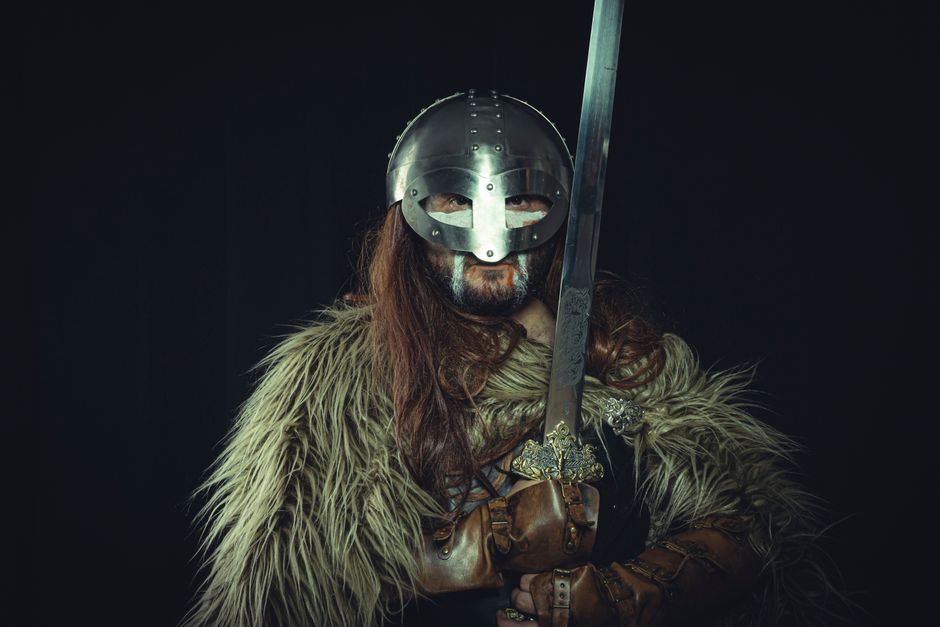
Why does it persist? Because it is a wonderfully clear symbol. Horns make a character instantly legible as “Viking” from the back row of a theatre or in a small game icon. Nineteenth-century art and opera helped popularise the image, and later costume design, comics and screen productions repeated it. Each repetition made the invention feel older. It is a neat example of how visual culture can outlive the evidence.

Gjermundbu: a reality check
The Gjermundbu helmet offers a more grounded point of comparison. Found in a tenth-century burial in Norway, it is the best-known near-complete Viking-age helmet. Its iron construction includes a rounded cap and a protective framework around the face, including a distinctive spectacle-like guard. It is not a horned showpiece. It is a practical object designed to protect its wearer.
One helmet cannot tell us that every Viking looked the same or that every warrior had access to comparable equipment. Archaeological survival is uneven, and expensive metal gear was not necessarily available to everyone. But Gjermundbu is a valuable reality check: when we have an actual helmet from the period, it looks very different from the theatrical horned version.
A better answer than “raiders or traders”
Viking ships were not built for a single story. Their speed and shallow draught made them useful for sudden attacks; other vessels carried cargo across long routes; and many journeys sat somewhere between commerce, migration, diplomacy and force. Raids deserve their place in the history, but they do not exhaust it. Trade connected settlements, supplied crafts and households, and carried Scandinavian travellers into a much wider network of exchange.
So, was trade the bigger deal? In the long view of everyday economic life, probably. In the surviving written record and in the popular imagination, raids often appear bigger because they were dramatic and frightening. Holding both ideas together gives us a more accurate picture: the Viking world was not simply a tide of raiders, but a maritime society in which ships could carry goods, people and weapons—sometimes all on the same voyage.
Reading note: Use the Print Article PDF/print function to save this piece for later, or pass it along with the Facebook share option.